
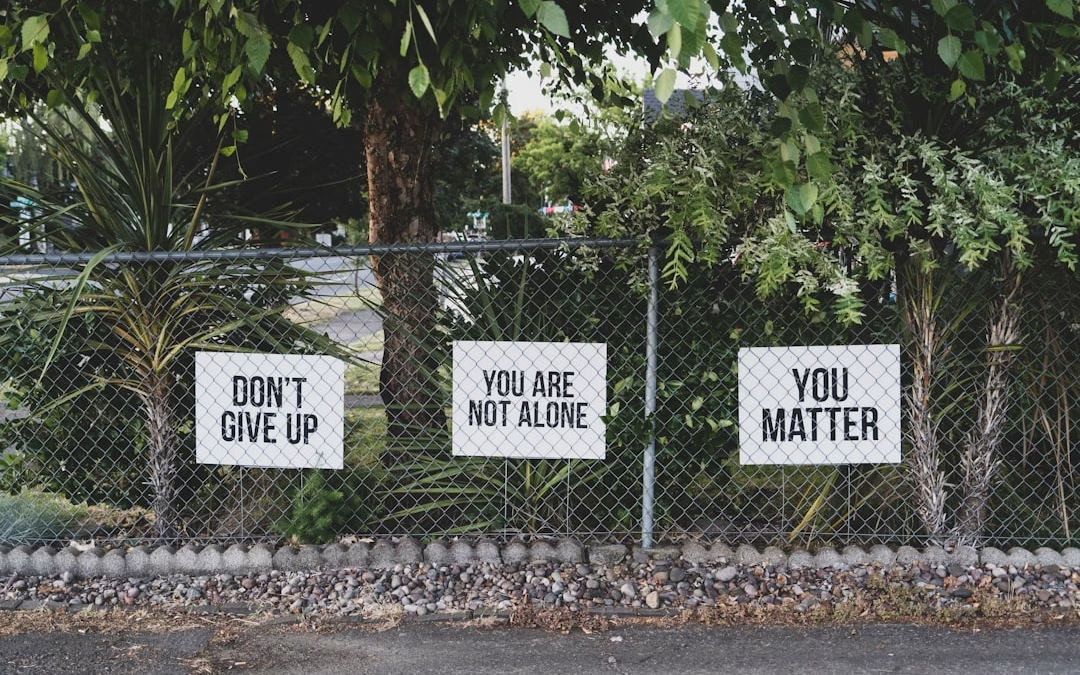
Let’s be real, life throws a lot at us, and sometimes it feels like our brain is a bit of a juggling act trying to keep everything balanced. Boosting your mental health and cultivating a positive mindset isn’t some mystical achievement; it’s about building practical habits that make a real difference. Think of it less like a quick fix and more like building a sturdy toolkit for navigating the ups and downs.
This isn’t about pretending everything is sunshine and rainbows all the time, which, honestly, is exhausting. It’s about equipping yourself with strategies that help you bounce back, find calm amidst the chaos, and generally feel more grounded. We’ll dive into some concrete ways to nurture your inner world.
First off, let’s clarify what we’re aiming for. A “positive mindset” doesn’t mean suppressing negative emotions or putting on a fake smile. That’s a recipe for burnout. Instead, it’s about developing a more balanced perspective, being resilient in the face of challenges, and fostering a sense of hope and optimism, even when things are tough.
It’s Not About Ignoring the Bad Stuff
It’s crucial to acknowledge that everyone experiences negative emotions. Sadness, anger, frustration – these are all valid human experiences and part of life. Trying to push them away or pretend they don’t exist is counterproductive.
The Trap of Toxic Positivity
You might have heard of “toxic positivity.” This is when someone insists on being positive no matter what the situation. It invalidates feelings and can make people feel like they’re failing if they’re not constantly happy. Our goal here is the opposite: healthy processing and balanced outlook.
Resilience: Your Mental Bounce-Back Ability
Think of resilience as your mental shock absorber. It’s the capacity to adapt well in the face of adversity, trauma, tragedy, threats, or significant sources of stress. It’s not about being unaffected by difficult experiences, but rather about being able to recover from them.
Building Your Resilience Muscles
Resilience isn’t something you’re just born with (or without). It’s developed over time through conscious effort and the adoption of certain habits and thinking patterns. We’ll explore some of these throughout this guide.
Maintaining good mental health is essential for overall well-being, and one effective way to enhance it is through engaging in activities that promote mindfulness and connection with nature. For instance, gardening has been shown to reduce stress and improve mood. If you’re interested in exploring how to cultivate a garden that can contribute to your mental health, you might find this article on composting helpful. It provides insights into creating healthy soil, which is fundamental for a thriving garden. You can read more about it here: Beginners Guide to Composting: Secrets for Successful Soil.
Small Habits, Big Impact: Daily Practices for Well-being
The most effective way to boost your mental health and foster a positive mindset is often through consistent, small actions. These aren’t grand gestures, but rather consistent habits that, over time, build a strong foundation for your mental well-being.
The Power of Mindfulness and Being Present
Mindfulness is essentially paying attention to the present moment without judgment. It sounds simple, but it can be incredibly powerful for reducing stress and increasing self-awareness.
Simple Mindfulness Exercises You Can Do Anywhere
You don’t need a meditation cushion or hours of free time. Try this:
- The One-Minute Breath: Just focus on your breath for 60 seconds. Notice the sensation of air entering and leaving your body. If your mind wanders (and it will!), gently guide it back to your breath.
- Sensory Awareness: Pick a sensation – the feeling of your feet on the ground, the taste of your coffee, the sound of birds chirping. Immerse yourself in that one sensation for a few moments.
- Mindful Eating: When you eat, really pay attention to the taste, texture, and smell of your food. Savor each bite.
How Mindfulness Reduces Stress and Anxiety
When you’re constantly worrying about the future or dwelling on the past, your stress levels skyrocket. Mindfulness pulls you out of those mental loops and anchors you in the present, where the actual experience of life is happening. This can significantly calm your nervous system.
Gratitude: Shifting Your Focus to the Good
It’s easy to get caught up in what’s going wrong. Actively practicing gratitude shifts your focus to what’s going right, even in the small things. This can retrain your brain to notice the positives.
Creating a Gratitude Journal
This is a classic for a reason. Dedicate a notebook to jotting down a few things you’re grateful for each day. They don’t have to be earth-shattering.
- Examples: “The warm cup of tea I had this morning,” “A kind word from a stranger,” “The comfort of my bed.”
- Why it Works: Regularly seeing a list of positive things can create a lasting shift in your perspective. It helps you appreciate the abundance that already exists in your life.
Integrating Gratitude into Your Day
Beyond journaling, look for opportunities to express gratitude. A quick “thank you” to someone who helped you, or a moment of silent appreciation for a beautiful sunset, can make a difference.
Movement: Connecting Body and Mind
Our physical and mental health are deeply intertwined. Regular physical activity isn’t just good for your body; it’s a potent mood booster and stress reliever.
Finding Movement You Actually Enjoy
The key here is “enjoy.” If you hate running, don’t force yourself to run. Explore different options:
- Walking: A brisk walk in nature can be incredibly therapeutic.
- Dancing: Put on your favorite music and just move!
- Yoga or Pilates: These focus on breath and mindfulness alongside physical exertion.
- Gardening: Getting your hands dirty and tending to plants can be very grounding.
The Science Behind Exercise and Mood
When you exercise, your brain releases endorphins, which are natural mood lifters. It also helps regulate neurotransmitters like serotonin and dopamine, which play a key role in mood, motivation, and well-being.
Sleep: The Foundation of Mental Restoration
You can’t run on empty. Prioritizing quality sleep is non-negotiable for good mental health. It’s during sleep that your brain processes emotions, consolidates memories, and repairs itself.
Establishing a Healthy Sleep Routine
Consistency is key. Try to:
- Go to bed and wake up around the same time: Even on weekends, try not to deviate too much.
- Create a relaxing bedtime ritual: This could involve reading, taking a warm bath, or listening to calming music.
- Limit screen time before bed: The blue light from devices can interfere with melatonin production.
- Make your bedroom a sleep sanctuary: Dark, quiet, and cool is usually best.
Understanding the Impact of Sleep Deprivation
Lack of sleep can lead to irritability, difficulty concentrating, increased anxiety, and a generally lowered mood. It makes it much harder to maintain a positive outlook.
Cultivating Positive Thought Patterns

Our thoughts are powerful. Learning to identify and challenge negative thought patterns and actively cultivate more positive ones is a core strategy for a positive mindset.
Identifying and Challenging Negative Self-Talk
We all have an inner critic, but sometimes it gets a little too loud and a lot too harsh. Learning to recognize these negative thoughts is the first step.
Common Negative Thought Traps
- All-or-Nothing Thinking: Seeing things in black and white. “If I don’t get this promotion, my career is over.”
- Catastrophizing: Imagining the worst-case scenario. “I forgot to reply to that email, they must think I’m incompetent and I’ll get fired.”
- Mind Reading: Assuming you know what others are thinking (usually negatively). “They didn’t smile at me, they must dislike me.”
- Overgeneralization: Taking a single negative event and seeing it as a never-ending pattern. “I messed up that presentation, I’m always going to fail at public speaking.”
Cognitive Restructuring: Rewriting Your Inner Dialogue
Once you identify a negative thought, question its validity.
- Is this thought actually true? What evidence supports it? What evidence contradicts it?
- What’s a more balanced or realistic way of looking at this?
- What would I say to a friend in this situation? Often, we’re much kinder to others than ourselves.
Practicing Self-Compassion
This is about treating yourself with the same kindness, care, and understanding you would offer to a dear friend who is struggling. It’s crucial for genuine positivity.
The Three Components of Self-Compassion
- Mindfulness: Being aware of your pain and distress without exaggerating or suppressing it.
- Common Humanity: Recognizing that suffering and imperfection are part of the shared human experience. You’re not alone.
- Self-Kindness: Being gentle and understanding with yourself, rather than harsh and critical.
How Self-Compassion Differs from Self-Esteem
Self-esteem is about feeling good about yourself based on performance or how others see you. Self-compassion is about being there for yourself during difficult times, regardless of your achievements. It’s a more stable and sustainable form of well-being.
Focusing on Solutions, Not Just Problems
When faced with a challenge, it’s easy to get stuck analyzing the problem. While understanding is important, actively shifting towards finding solutions can empower you.
The “How Might We?” Approach
Instead of dwelling on “Why is this happening?” or “This is terrible,” try reframing.
- “How might we overcome this obstacle?”
- “How might we make this situation better?”
- “What resources do we have available to help us?”
Breaking Down Big Problems
Large problems can feel overwhelming. Break them down into smaller, more manageable steps. For each step, ask yourself, “What’s the next smallest action I can take?”
Building and Nurturing Your Social Connections

Humans are social creatures. Strong, positive relationships are a cornerstone of good mental health and contribute significantly to a positive outlook.
The Quality of Your Connections Matters
It’s not about having hundreds of acquaintances; it’s about having a few people you can truly rely on and be yourself with. These are your support systems.
Identifying Your Support Network
Who are the people in your life who:
- Listen without judgment?
- Offer encouragement and support?
- Celebrate your successes and comfort you during failures?
- Make you feel seen and valued?
Investing Time in Relationships
Life gets busy, but making time for meaningful interactions is vital.
- Schedule catch-ups: Even a quick coffee or a phone call can make a difference.
- Be present when you’re with them: Put away distractions and truly engage.
- Offer support in return: Be the kind of friend you want to have.
The Impact of Loneliness on Mental Health
Chronic loneliness can be as detrimental to your health as smoking or poor diet. It can increase the risk of depression, anxiety, and other mental health issues.
Proactively Seeking Connection
If you’re feeling isolated, don’t wait for others to reach out.
- Join clubs or groups: Find activities aligned with your interests.
- Volunteer: This is a great way to meet like-minded people while doing good.
- Take a class: Whether it’s cooking, art, or a new language, classes offer natural interaction.
The Difference Between Being Alone and Being Lonely
You can be alone and feel perfectly content, but being lonely is a distressing feeling of isolation. Recognizing this distinction can help you address the root cause.
Maintaining good mental health is crucial for overall well-being, and one effective way to support this is through self-sufficiency and independent living. Engaging in activities that promote autonomy can significantly enhance your mental resilience and confidence. For more insights on how to cultivate a fulfilling independent lifestyle, you can explore this related article on essential tips for independent living at essential tips for independent living. By implementing these strategies, you can create a positive environment that nurtures your mental health.
Setting Boundaries for Mental Protection
| Metrics | Definition |
|---|---|
| Positive Emotions | Feelings of happiness, joy, and contentment |
| Resilience | Ability to cope with challenges and bounce back from adversity |
| Self-Esteem | Confidence and belief in one’s own worth and abilities |
| Healthy Relationships | Positive connections with others that provide support and fulfillment |
| Work-Life Balance | Ability to manage responsibilities at work and personal life without feeling overwhelmed |
Boundaries are the invisible lines we draw around ourselves to protect our physical, emotional, and mental energy. They are essential for maintaining well-being and preventing burnout.
Understanding What Boundaries Are (and Aren’t)
Boundaries are not about being selfish or controlling; they are about self-respect and ensuring you have the capacity to show up fully in your life.
Common Areas Where Boundaries Are Needed
- Work: Saying no to extra tasks when you’re already overloaded, setting clear working hours.
- Relationships: Limiting how much emotional labor you take on for others, establishing personal space and time.
- Social Media: Setting limits on how much time you spend scrolling, unfollowing accounts that make you feel bad.
- Family: Deciding what level of involvement is healthy for you.
The Art of Saying “No” Gracefully
Saying no can be challenging, but it’s a skill that can be learned.
- Be direct and concise: You don’t need a lengthy explanation.
- Offer an alternative if possible: “I can’t help with that right now, but perhaps I could help with X next week.”
- It’s okay to take time to consider: “Let me check my schedule and get back to you.”
- Remember, it’s your right to decline.
Protecting Your Energy
Think of your energy like a finite resource. Healthy boundaries help you conserve and direct that energy where it matters most.
Recognizing Energy Drains
What people, situations, or activities consistently leave you feeling depleted? Identifying these drains is the first step to managing them.
Setting Boundaries with Energy Vampires
This might be individuals who are constantly negative, demanding, or emotionally draining. It doesn’t mean cutting them out entirely (though sometimes that’s necessary), but rather managing the interaction to protect yourself.
- Limit the duration of interactions.
- Steer conversations away from negativity.
- Don’t over-share personal information.
Seeking Professional Support When Needed
There’s a pervasive stigma around mental health, but getting help is a sign of strength, not weakness. Sometimes, we need a little extra guidance.
Recognizing When You Might Need Help
It’s okay to realize that you’re struggling and that your usual coping mechanisms aren’t enough. Consider seeking professional help if you experience:
- Persistent feelings of sadness or hopelessness.
- Overwhelming anxiety or worry.
- Significant changes in sleep or appetite.
- Loss of interest in activities you once enjoyed.
- Difficulty functioning in daily life (work, relationships).
- Thoughts of harming yourself or others.
The Stigma Around Mental Health and Help-Seeking
For a long time, discussing mental health struggles was seen as a sign of weakness or a personal failing. This is changing, but the echoes of that stigma can still make it hard for people to reach out.
Different Types of Mental Health Professionals
- Therapists/Counselors: These professionals offer talk therapy to help you understand your thoughts, feelings, and behaviors, and develop coping strategies.
- Psychologists: They often have advanced degrees and can conduct psychological assessments, as well as provide therapy.
- Psychiatrists: These are medical doctors who can diagnose mental health conditions and prescribe medication.
Finding the Right Fit For You
The relationship with your mental health professional is important. Don’t be afraid to:
- Do some research: Look for professionals who specialize in areas relevant to your needs.
- Have an initial consultation: See if you feel comfortable and understood.
- It’s okay to switch: If the first professional you see isn’t the right fit, it’s perfectly acceptable to seek someone else.
Whether it’s cultivating gratitude, moving your body, connecting with others, or setting firm boundaries, these strategies work best when they become part of your routine. It’s a journey of progress, not perfection, and every small step you take towards nurturing your mental health is a step towards a more positive and resilient you.
