
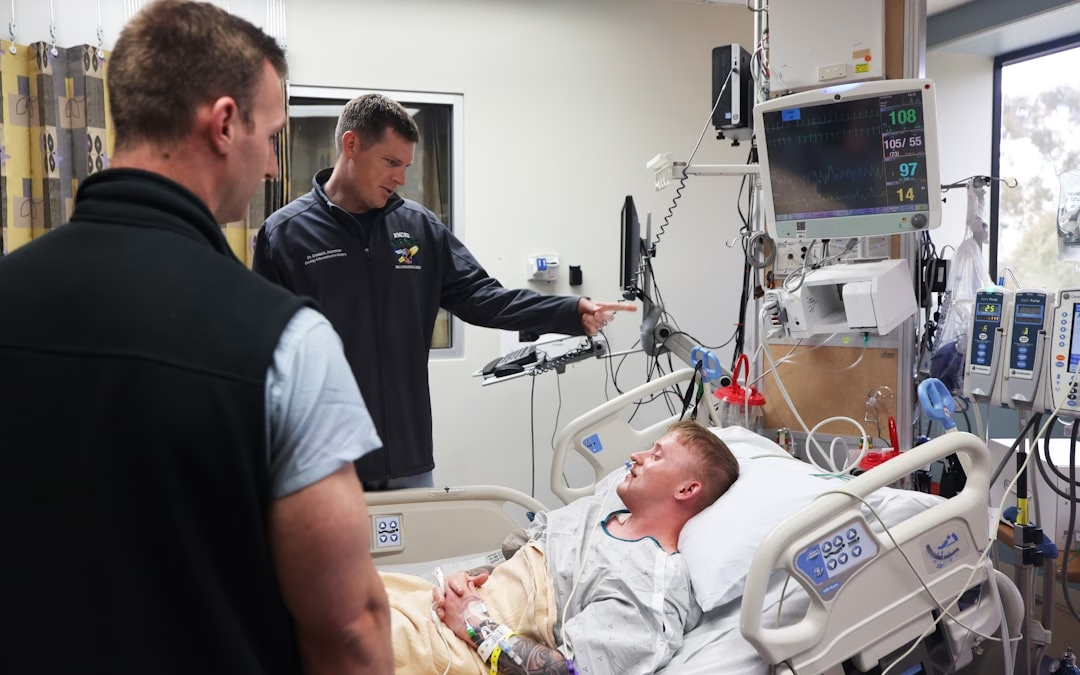
So, you’re curious about how hospitals are working to make sure patients get the best possible care and recover smoothly. One of the key strategies they’re focusing on is called “bundle care.” Basically, it’s about grouping a set of proven, evidence-based best practices together for specific conditions or procedures. Instead of each healthcare professional doing their part in isolation, bundle care ensures everyone is on the same page, working from the same playbook to achieve the best results for you, the patient. This isn’t about magic; it’s about making sure the right steps are taken at the right time, consistently, to keep you safe and help you heal faster.
What Exactly is Bundle Care?
Think of it like a carefully designed checklist for a specific medical situation. Bundle care isn’t just a random collection of tasks; it’s a precise set of interventions that, when performed together, have been shown to significantly improve patient outcomes. These interventions are usually evidence-based, meaning they’re backed by solid research proving their effectiveness. Hospitals identify certain high-risk conditions or common procedures where patient outcomes can vary, and then they develop a bundle of care for those specific situations.
The Core Idea: Synergy in Action
The power of bundle care lies in its synergistic effect. Individually, each component of a bundle might have a moderate impact. However, when implemented as a complete package, the combined effect is much greater. It’s like baking a cake: you can have great flour and eggs, but without the right proportions and the cooking process, you won’t get a delicious cake. Bundle care aims to ensure all the crucial “ingredients” of care are present and correctly applied.
Why Different Bundles for Different Needs?
You’ll find different bundles for different medical scenarios. That’s because what works for preventing a surgical site infection won’t necessarily be the most effective approach for managing sepsis. The bundles are tailored to the specific risks and challenges associated with each condition or procedure. This customization is key to their effectiveness.
In exploring innovative approaches to healthcare, the concept of bundle care in hospitals has gained significant attention for its potential to enhance patient outcomes and streamline services. A related article that delves into the importance of holistic practices in various sectors, including healthcare, can be found at Unlock the Power of Holistic Farming Approaches. This article highlights how holistic methodologies can be applied not only in farming but also in healthcare settings, promoting a more integrated and comprehensive approach to patient care.
Preventing Infections: A Top Priority
One of the most prominent areas where bundle care has made a huge difference is in preventing healthcare-associated infections (HAIs). These are infections patients pick up while receiving medical care, and they can be serious, leading to longer hospital stays, increased costs, and even worse outcomes. Bundle care provides a structured way to minimize infection risks.
Central Line-Associated Bloodstream Infections (CLABSI) Bundle
Central lines, those IV catheters inserted into large veins, are essential for many patients, but they can also be a pathway for bacteria to enter the bloodstream. The CLABSI bundle is a prime example of how structured care can prevent these dangerous infections.
Strict Aseptic Technique During Insertion
This is fundamental. It means using sterile gloves, gowns, masks, and drapes. Everything that comes into contact with the insertion site needs to be meticulously cleaned and kept sterile. No cutting corners here.
Proper Skin Antiseptic Use
Choosing the right antiseptic (like chlorhexidine) and allowing it to dry properly on the skin before insertion is crucial for killing germs.
Daily Review of Necessity
Healthcare providers regularly assess if the central line is still needed. If it’s not, it gets removed promptly. This isn’t about keeping it in “just in case.”
Hand Hygiene
This is a universal recommendation, but within CLABSI bundles, it’s emphasized at every point of patient contact, especially before and after touching the central line.
Catheter-Associated Urinary Tract Infections (CAUTI) Bundle
Urinary catheters are necessary for some patients, but they can also lead to UTIs. The CAUTI bundle focuses on preventing these.
Indication for Catheterization
The first and most important step is asking: is this catheter truly necessary? If there are alternatives, they should be explored.
Aseptic Insertion Technique
Just like with central lines, proper sterile technique during catheter insertion is paramount to avoid introducing bacteria.
Maintaining a Closed Drainage System
Ensuring the catheter and drainage bag are always connected and the system remains sealed prevents contamination.
Prompt Removal
As soon as the catheter is no longer medically required, it’s removed. This single action dramatically reduces infection risk.
Improving Surgical Outcomes
Surgery, while often life-saving, carries its own set of risks. Bundle care is being widely adopted to improve surgical safety and patient recovery.
Surgical Site Infection (SSI) Prevention Bundle
SSIs are a significant concern after surgery. Bundles are designed to reduce their occurrence.
Appropriate Use of Prophylactic Antibiotics
Giving the right antibiotic at the right time before surgery, and stopping it within a specific window after surgery, is critical. This isn’t about overusing antibiotics; it’s about targeted protection.
Temperature Management
Keeping the patient’s body temperature stable during and after surgery can improve immune function and wound healing.
Blood Glucose Control
For diabetic patients, maintaining steady blood sugar levels before and after surgery is important for wound healing and reducing infection risk.
Hair Removal (if necessary)
Using clippers instead of razors for hair removal at the surgical site, and doing it just before surgery, minimizes skin damage that could harbor bacteria.
Venous Thromboembolism (VTE) Prophylaxis Bundle
Blood clots (deep vein thrombosis or pulmonary embolism) are a dangerous complication for many hospitalized patients, especially after surgery or with immobility.
Risk Assessment
Every patient is assessed for their individual risk of developing blood clots. This involves looking at factors like age, medical history, and type of surgery.
Mechanical Prophylaxis
This can include things like sequential compression devices (SCDs) that inflate and deflate around the legs to promote blood flow, or graduated compression stockings.
Pharmacological Prophylaxis
In many cases, blood-thinning medications (like heparin or low-molecular-weight heparin) are prescribed to prevent clot formation.
Early Mobilization
Getting patients up and moving as soon as it’s safe is a key strategy to improve circulation and reduce clot risk.
Optimizing Pneumonia Care
Pneumonia, an infection of the lungs, can be particularly severe in hospitalized patients. Bundle care helps ensure a consistent and effective approach to managing it.
Ventilator-Associated Pneumonia (VAP) Prevention
When patients require mechanical ventilation, there’s an increased risk of developing pneumonia. VAP bundles are crucial.
Head of Bed Elevation
Keeping the patient’s head elevated helps prevent stomach contents from being aspirated into the lungs.
Oral Care
Regular oral hygiene, often with antiseptic solutions, helps reduce the bacterial load in the mouth that can be inhaled.
Subglottic Secretion Drainage
For some ventilated patients, specialized tubes allow for the drainage of secretions that can accumulate above the breathing tube, reducing the risk of aspiration.
Sedation Vacations and Daily Readiness Assessments
Periodically reducing sedation and assessing if the patient can breathe on their own can help shorten the duration of mechanical ventilation, thus reducing VAP risk.
Community-Acquired Pneumonia (CAP) Management
For patients admitted with pneumonia acquired in the community, bundles help streamline diagnosis and treatment.
Timely Administration of Antibiotics
Getting the right antibiotic started within a specified timeframe after diagnosis is critical for fighting the infection.
Blood Cultures and Sputum Gram Stain
Collecting these samples before starting antibiotics can help identify the specific bacteria causing the infection, allowing for more targeted treatment.
Appropriate Oxygenation and Ventilation Support
Ensuring the patient receives adequate oxygen and, if necessary, appropriate support for breathing is fundamental to recovery.
In recent discussions about improving patient outcomes, the concept of bundle care in hospitals has gained significant attention. This approach emphasizes the importance of coordinated treatment plans that address multiple aspects of a patient’s health simultaneously. For those interested in exploring complementary strategies to enhance overall well-being, you might find valuable insights in an article about natural remedies. You can read more about these holistic approaches by visiting this link.
Improving Outcomes in Sepsis Management
Sepsis, a life-threatening complication of infection, requires rapid and coordinated care. Sepsis bundles are designed for speed and effectiveness.
The Sepsis Bundle: A Time-Sensitive Approach
The sepsis bundle is all about acting fast. The faster critically ill patients receive the right treatments, the better their chances of survival.
Measure Lactate Level
Lactate is a byproduct of the body’s stress response during sepsis. Elevated levels indicate serious illness.
Obtain Blood Cultures Before Administering Antibiotics
It’s essential to collect blood samples to identify the infecting organism before flooding the system with antibiotics.
Administer Broad-Spectrum Antibiotics
Starting antibiotics that cover a wide range of potential bacteria is crucial in the initial phase when the exact pathogen is unknown.
Begin Rapid Crystalloid Resuscitation
Giving intravenous fluids quickly helps to restore blood pressure and circulation that can be compromised by sepsis.
Apply Vasopressors to Maintain Mean Arterial Pressure (MAP)
If fluids alone don’t bring blood pressure up to a safe level, medications called vasopressors are used to support circulation.
Measuring Success and Continuous Improvement
Implementing bundle care isn’t a one-and-done affair. Hospitals are constantly measuring the impact of these bundles and looking for ways to make them even better.
Data Collection and Performance Monitoring
Hospitals meticulously track data related to the interventions in each bundle. This includes things like how often each best practice is performed, the rate of infections, and patient recovery times.
Audits and Feedback Mechanisms
Regular audits are conducted to ensure the bundle components are being followed consistently. Feedback loops are established to alert teams when performance dips or to celebrate successes.
Adapting to New Evidence
The medical field is always evolving. As new research emerges, bundle care protocols are reviewed and updated to incorporate the latest evidence-based practices. This ensures that patient care remains at the cutting edge.
Patient and Family Engagement
While not always explicitly part of a “bundle,” involving patients and their families in understanding the care plan and the importance of following specific instructions can also contribute to better outcomes. Empowering patients with knowledge can make them active participants in their recovery.
In essence, bundle care is a practical, structured approach that brings together the best known strategies to help patients get better. By standardizing and consistently applying these proven practices, hospitals are making significant strides in reducing complications, shortening recovery times, and ultimately, ensuring that patients receive the highest quality of care possible. It’s about taking the guesswork out of critical care and putting evidence-based medicine into action, for the benefit of everyone.
